
WINSDAY WISDOM 220
ANGER!!!
Anger gets the best of us. It brings out the worst in us.
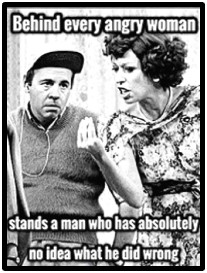
I have experienced worse driving incidents, but this was the latest. The car jumped two lanes to squeeze into the left turning lane as we approached the crowded stoplight. Right in front of me! They would have hit my car except for my catlike reflexes which slammed on my brakes, allowing the invading car to miss mine by inches.
Instead of being grateful for the near-miss collision, my mind went straight into anger mode. I showed a little restraint. Instead of laying on the horn, I banged on the dashboard and flickered my headlights. I shouted a few things. I probably called her “an idiot.”
My heartrate spiked. My teeth clinched. My stare was locked in.
As our cars made the left turn, I looked for the opportunity to pass the careless driver on the right. I intended to dart in front of that “how dare you car” the way it had crossed over into my airspace.
Suddenly I felt as though I were in the Ben Hur chariot race. Horses racing side-by-side at full speed with wheels bumping against the opponent’s chariot. This was Do or Die. This is also how many “road rage” incidents get started.
Maybe this would become like the famous car chase in The French Connection or in one of The Fast and The Furious movies.
At the next stoplight, I eased up next to the enemy who almost wrecked my car. I was ready for confrontation, but a little undecided about my first action. My mind raced through things I could do and things I could say.
Flipping someone the bird has never been my style. I am more likely to raise my arms and hands in a questioning gesture.
A strong cussing has never been part of my anger mode either. I do not use the “What the H-E-double hockey sticks?” even though my friend, Jeff, always said that God knew that was what I was thinking.
“Are you an idiot?” is more my style. Maybe “You are a dangerous driving moron!” My mind came up with many classic put-downs which are far away from a Love First, Love Most response.
The driver was a younger woman holding her phone and chatting away. A toddler was in the back car seat. She glanced over at me. She did not even notice my facial expressions and hand gestures. She turned away before my exaggerated mouthed words got a chance to air their grievances. She was clueless.
Clueless! That hurt even more. It did not lessen my anger. It only added fuel to my feelings. I was not at “road rage” but I was not in “cool down stage” either.
I noticed her intention to pull into the nearby convenience store. This would be the time for an encounter. Someone…my wife…needed to tell her off. Her negligence nearly caused a wreck. Her careless selfishness was rude to me and the drivers behind me.
Thankfully, my need for speed to be somewhere overruled my need to “read her the riot act.” That phrase refers to “stop causing trouble or there will be trouble.” R-i-o-t” act. I always thought it was the R-i-g-h-t act, like telling someone how to act right.
The original term is connected to a real Riot Act established by the British government in 1714, to prevent the actions of others causing trouble. The police officer would first read the offenders The Riot Act before they were dispersed in similar fashion to our present-day officers reading someone their Miranda Rights before they can be interrogated.
Anyway, I drove away before there was more to confess.
Anger at a clueless person is probably the most wasted anger of all. They will not get it. It will not ruin their day as much as the encounter will continue to ruin mine. I will end up feeling more guilty for an act where I was the innocent party.
I repeat for emphasis. Anger gets the best of us. It brings out the worst in us.
None of us are strangers to this kind of driving scenario. Usually, we are not the offender.
Some people are just bad drivers. Many are distracted by texting.
Some drivers are clueless that any other car is on the road. On the other end of the spectrum lies the equally dangerous self-proclaimed “NASCAR drivers” weaving in and out of traffic at full speed. Their perceived driving excellence only survives fatal crashes because of the cautious braking of other drivers.
Belligerent behavior on the roads has increased significantly. Stress and erratic driving add to the cause. Obscene gestures, throwing objects, or forcing others to alter their car direction or speed have all become too common. Race car speeds or snail’s pace puttering heighten the difficulty. Riding the bumper, tailgating, and sudden cut-offs are aggravating.
Impatience, irresponsibility, and erratic lane changing are usually symptoms of the bigger problem…selfishness. The driver believes the importance of his purpose supersedes that of everyone else. We all feel that way.
Do not get in MY way. Do not force me to change MY speed or direction or timing. Everyone plus the stoplights need to accommodate ME. The reason that does not work is because most everyone else is thinking those exact thoughts…except my grandmother.
A New York Medical School psychiatrist wrote, “We have a brain that’s acutely wired for things that might provoke us into anger or fear or survival…causing us to either flee or to attack.”
I prefer my mom’s advice. In my earlier years, my mom would reprimand my attitude to bad drivers, especially slow drivers. She would say, “Always think; that could be your grandmother.”
My grandmother never learned to drive until she was fifty-five. I can assure you her speedometer never reached fifty-five. NEVER!
It would be better to give other drivers the benefit of the doubt. Maybe they are rushing to the hospital or responding to a loved one’s adversity. Probably not, but maybe it is just my grandmother. I would appreciate it if you would treat her in the way you would treat your grandmother.
And, yes, I know some of your grandmothers. They drive like The Little Old Lady from Pasadena. Go, Granny, go! It might be my daughter making the Indy 500 look like a Roman chariot race. She’s having fun, fun, fun ’til her daddy takes the T-bird away.
That’s right. Share some understanding. The slow erratic driver might be lost or nearly blind. Have some heart! It might me my friends’ teenager who was taught to always drive slowly and carefully in the left lane. Send him a Driver’s Ed manual!
The degree of anger, like anxiety, shows up in our different temperaments.
Have you ever had an anger situation that was poorly handled? Bombshell words! Exaggerated motions! Firestorm emotions!
In driving, learn to avoid eye contact and refrain from hand gestures. There is no benefit to escalating the frustration.
Have you ever done the right thing and just walked or driven away from the offender in anger?
As you drive away, you continue the argument in your head. You come up with the classic comeback, the ultimate put down, the drop the mic moment. You leave them speechless. You have them on the ropes. You win!
Then you go home and complain to a loved one and tell them what you wanted to do and speak. They get the full brunt of your anger. At least, the anger is not directed at them.
It is not wrong to become angry. Sometimes anger can be an expression of love for God and others. Jesus was angry in those circumstances. But Jesus never expressed anger as retribution or frustration.
We have to be wise. Anger explosions can cause great damage to hearts and relationships. Anger suppressed can lead to “frozen rage” which might express itself by depression.
The difference between anger and danger is the letter “d.” Inappropriate anger can destroy lives and relationships as well as automobiles. Anger can cause bad decisions. Just a little too much anger becomes dangerous on the roadway and in the home.
The right expression of anger should motivate us to some kind of loving attitude and actions. The #1 Textbook encourages us to “get rid of all bitterness, rage, and anger and replace it with kindness, compassion, and forgiveness.” Forgive yourself for getting angry and forgive the other person, preferably BEFORE you express your anger to them. We will need the Lord’s help to do that.
Jesus never had “road rage.” He did ride a donkey through some crowded streets. We know he walked through this world amidst the self-absorbed, hot-headed, rude, and crazy people. Can you imagine Legion driving in a frenzy on the freeway? Or Peter taking out his sword on another driver’s ear? No matter who was on the road, Jesus was always concerned about the welfare of others. He always loved first and loved most.
What Winsday Wisdom can we glean from that? “Whatever you do, do all to the glory of God…Do all things in love…Be patient and kind…Be slow to anger…Exchange coats by putting off anger and putting on kindness…Treat others the way you would want them to treat you” (#1 Textbook).
Treat other drivers the way you would want them to treat your grandmother. It really does not matter if they do not reciprocate in kind. In truth, that is the challenge.
I do not always know what “love first and most driving” should look like. I do understand that it definitely involves learning to drive “forgiving first and most!“
“STOP. LOOK. LISTEN.” That is not just a good warning for crossing train tracks. It is great advice for “road rage anger.” Stop before you say or do something to express your anger to the other person. Look to see if it might be my grandmother. Listen to God speak to your heart, “Love First and Love Most.”
Praying for Safe Driving and Less Stress! Love you!
 LOVE FIRST...LOVE MOST