THE GREAT OUTDOORSMAN

My new college freshman friend was a decorated Eagle Scout. I was kicked out of my Boy Scout pack before reaching the Tenderfoot level.

George asked if I liked being outdoors.

I enjoyed playing football and baseball outdoors, and I practiced basketball in my backyard almost every day.

George was the real life protype for Robert Redford’s Jeremiah Johnson and Leonardo DiCaprio’s Revenant. George had more merit badges than common sense as he convinced a group of small-town refugees to accompany him on our first-ever mountain camping trip.

His cry continues to echo in my memory. “Nature builds character.”

George was an outgoing outdoorsman. He planned a weekend camping trip on White Mountain so a few of us could get away from the classroom grind. The tallest place where I grew up was Cavanaugh Hill, the highest hill in the world. It was only slightly taller than the county landfill.

I packed for the adventure using his supply list. I read up on survival skills, which was its own challenge since Google search was still years in the future.
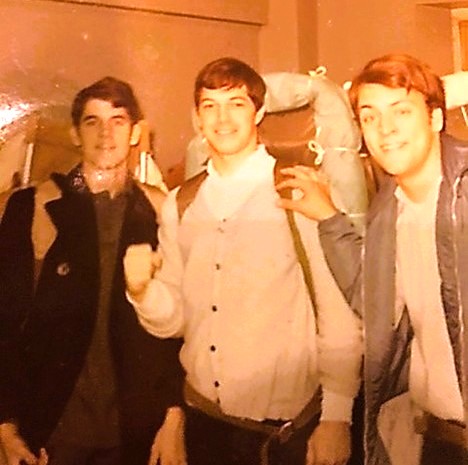
Our first challenge was climbing the mountain. It was fun, filled with laughter and stories from our high school days. Finally, we found the perfect place to rest. How do I know? George de Guide said it was our spot for the night.

Setting up the tent was the next camping challenge. General George laid out the stakes with military precision, then handed us the instructions. Twenty minutes later, my tent looked like a deflated kids’ bounce house.

The flashback memory was too much. I had a confession to make to George and the crew about my traumatic youthful experience in Cub Scouts.

My parents wanted me to become an Eagle Scout. They placed me in a Boy Scout troop, sacrificed precious dollars to buy me the blue uniform, pay the club fees, and purchase the books and project materials.

I failed to achieve the rank of Tenderfoot, the lowest scouting rank.

I FLUNKED OUT OF CUB SCOUTS!

That is right! I memorized all the mottos and lessons. I learned the salutes and pledges. I did the projects to earn merit badges. However, I failed tying knots!

I could do math and science but not knots. It has been a lifetime problem.

My grandmother used a knitting needle to untie the tight knots in my childhood shoelaces. Thankfully, she was not as forceful as Alexander the Great with the famous Gordian Knot. He untangled the complex knot in one quick strike with his sword.

In Cub Scouts, I struggled to learn different knots: square knot, two half-hitches, and taut line hitch. No knots meant no tent, and no tent meant no Tenderfoot badge.

I was trustworthy, loyal, courteous, and brave; but my mental block was just as tangled as my rope. My knots had names like” Unbelievable” and “What in the World” and “Inextricable.” Yep, boys and girls, my scout knots could not be unraveled!

I lost hope of becoming a Scout Tenderfoot during our Cub Pack’s overnight camping trip. I had to set up the leader’s tent, but it rained that night and the tent fell down, soaking our leader and his clothes. It was funny, except to the Cubmaster.

I was eventually dismissed from the club and kicked out of the Pack. “Do Your Best” was a catchy motto, but if your best failed to correctly tie knots, you were “Knot” in the club.

That failure haunted my life then and now. Humiliation. PTSD!  Knot frustration! A mental Knot Block! Tanglephobia!

Anything with a knot starts as a nuisance and ends as a nightmare.

My associates laughed at my story and my current tent debacle. George was more understanding. He diplomatically called my poorly erected tent “modern art” and rebuilt it in under three minutes, narrating his every move like a future YouTube tutorial.

Tarzan swung on branches while we collected wood for the campfire. Our Eagle Scout scolded us for using matches to start the fire. The show-off caveman created fire by rubbing sticks together.

Dinner was next on the agenda. If we had waited for cell phone invention, we could have ordered pizza delivery. Hot dogs and S’mores made up our menu. The crackling fire provided welcomed warmth.

Connection, reflection, and campfire stories fed our souls with lessons learned around the flames of friendship.

As night fell, the woods came alive with mysterious noises: twigs snapping, leaves rustling, and what sounded suspiciously like a frightened roadrunner fleeing Wiley Coyote.

Our Daniel Boone alerted us that the bears in the area were friendly. Camper friend Joel sarcastically asked if we should expect a visit from Yogi Bear and his loyal sidekick, Boo-Boo.

George reaffirmed we had nothing to fear. How did he know? The Boston Strangler was still on the loose. We were also camping near Fall River, home of the famous axe-murderer, Lizzie Bordon.

They are called campfire “ghost stories” for a reason.

As the full moon rose over the pines, the winter night was filled with howling coyote sounds similar to the music track from The Good, the Bad, and the Ugly.

The climb, the cold, the cooking, and the campfire chats were memorable. The sub-freezing temperature and the proximity of howling wolves were not as pleasant.

I crawled into my sleeping bag, leaving only my eyes visible, like two disco balls in the dark. Our host suggested putting heated rocks from the campfire in our sleeping bags for warmth. It worked, but my sleeping bag’s bottom melted.

We woke up before dawn from our peaceful sleep, relieved that there was no bugle blast, just the sound of Jungle Jim doing his morning exercises.

I extracted my feet from the melted encasing and stumbled toward the campfire. This was one of the few times in life I sipped coffee. No one brought a Coke or hot chocolate. The breakfast was phenomenal.

Somehow, we made it to the summit just in time for the clouds to roll in and block the view. As we tripped and laughed our way back down the mountain, it hit me: I survived the night and it was fun.

I learned some valuable lessons. I discovered that the wilderness is full of adventure and beauty, and the realization that next time, I am booking a cabin and bringing a cook.

Outdoorsman? Jesus was an outdoorsman.

From the hills of Galilee to the shores of the Sea, he found solace and purpose beneath open skies. He rose with the dawn. He climbed mountains, slept under trees, and walked on water.

He sailed in boats and taught multitudes on the mountainside. He walked down dusty roads, miles and miles from village to village. He noticed the birds and gazed at the clouds. He laid his head on rocks to rest. He meditated in olive groves and along quiet hillsides.

He moved among the rocks and desert wilderness. He appreciated the flowers blooming in the spring and enjoyed the fresh fruit of summer. He moved through the wheat fields ready for harvest.

Jesus taught lessons about seeds needing to be sown in fertile ground, not the rocky byways or among the weeds. He observed the lilies clothed more beautifully than King Solomon in all his splendor,

He taught how the sparrows were so much loved by God that they had no worries. He understood sheep and their need for a shepherd’s care. He called attention to the resilience of the smallest mustard seed.

Storms never frightened him. Surging waves obeyed him. Some nights, he slept in a boat on the sea.

Outdoorsman?

Jesus listened to fish stories and acted as a fishing guide for failing fishermen who landed their largest catch following his instructions. He built campfires in the sand and cooked fish beside the lake.

He shared bread under the stars, the same stars Abraham once tried to count as his heart pondered his promised descendants. The same stars Isaiah declared were beyond innumerable, but all named by God. The same stars in David’s songs that unceasingly declare the glory of God.

Jesus traveled over sea and land to find a lost man crying in the cemetery. He reminded Legion and all his followers that they were never alone, even in the wilderness, even in the darkness, even in the storms of life.

The world was his classroom, the earth his canvas—and in every sunrise and sunset, he saw the handiwork of his Father. In every day, in every place, and in every face, he saw his purpose…to love first and to love most.

Yes, Jesus was an Outdoorsman!

The #1 Textbook describes him as the Rose of Sharon, the Lily of the valley, the bright and morning Star, the Sun of righteousness, the Rock of salvation, the Good Shepherd, the Maker of heaven and earth. Fisher of men.

I hope you will get outdoors or at least look outside. Gaze at the stars. Feel the early morning rays of the sun. Marvel at the moon. Notice the birds in the trees or the geese flying by. Smell the flowers.

Pause and reflect on the glory of God highlighted in the grandeur of a majestic mountain, the beauty of a clear lake, the countless grains of sand on a gorgeous beach, the cascading waves of the incessant tide, the cool freshness of an evening breeze, the rhythm of a sudden rainstorm, the purity of a Winterland snowfall.

The canvas of creation was designed to stir our senses, lift our spirit, and draw us closer to our Creator, the lover of our soul. The outdoor creation invites us to gaze on God and breathe in his life afresh and anew with stewardship and wonder.

Everything was created by him as a display of his glory. Every time we see something that strikes us as beautiful or awesome we should praise the Lord Jesus for giving us this great outdoors to enjoy.

Yes, Jesus was an Outdoorsman!

Jesus prayed and wept in a garden. He hung on a cross on a hill called Golgotha. He saw the skies darken as black as our deadened hearts. And he refused to stay inside the closed tomb.

Jesus was a great outdoorsman! The light of the world!

Let His light shine on, in, and through you…Inside and Outdoors!

EYES UP…ENJOY THE JOURNEY!

Don’t Judge a Book by its Cover: Renew Your Resolution

Voted Top Favorite story again.

I received a late-night call from the police. A body was found in the backyard of the missionary house adjacent to our church parking lot. A neighbor had called 911. The person was either drunk or dead. The law enforcement asked me to be there as quickly as possible to ID the person.

What did I feel at that moment? Shock. Apprehension. Worry.

That hot Louisiana August night became unforgettable.

I arrived at the church parking lot within fifteen minutes of the alert. It looked like a crime scene. Police cars, flashing lights, yellow tape barriers, officers with flashlights inspecting the backyard area of the missionary house.

A policeman stopped me to confirm my identity. The officer explained that a neighbor had called the emergency hotline reporting a lifeless body in the darkened backyard next door. Upon investigation, the police startled a young man outside the house. As he sat up, guns were drawn. The suspect was ordered back to the ground where he was handcuffed and questioned.

The police suspected drunkenness or drugs. They inspected the surrounding area for corroborating evidence. They also searched for another body.

I watched from a distance as the police put the arrested man through the field sobriety test. They checked his balance, coordination, and attention span. The officer ordered the handcuffed man to gaze at a moving flashlight, walk a straight line with a turnaround, and stand on one leg.

When the field test was completed, I was escorted to where two police cars faced each other. In the midst of their headlights, a shadowy figure stood in handcuffs, surrounded by several officers. The young man was barefoot, dressed in blue jean overalls with no shirt.

The lead officer asked if I knew this person. As I approached, the shackled young man grinned and spoke, “Hey, Brother.”

The center of suspicious attention was Jim. Jim McCarty was one of my preacher school interns. Oh, my!

Under intense questioning, Jim explained he was lying in the backyard, gazing at the stars, and contemplating the greatness of God’s glory while reciting Bible verses. He was shocked to find his explanation rejected as insanity,

The officers thought this was delusional or drug-induced hallucinations.

I quieted the policemen and freed the handcuffed Jim with a simple statement. “This is Jim. I can assure you that his testimony is absolutely truthful. As strange as it sounds, this is not unusual for him. Jim is different, in a good way.”

The officer responded, ” I would have sworn he was in a dope daze. It only goes to show that you don’t judge a book by its cover.”

Jim was part of our first group of preacher school interns. Each guy was unique and yet similar in his big-hearted love, courageous faith, and God-honoring usefulness to the kingdom. I love them all like sons.

God sent Jim to us by way of a suggestion from my brother who pastored a church in Texas. He had a young man whom he thought could benefit from being in a new environment. Jim had recently dropped out of college for the second or third time. Joe was concerned about Jim’s social development, his aversion to education, and his lack of direction in life. Would we consider taking him under our wings?

Jim arrived in his trademark overalls. He did wear a shirt underneath and, for the church greeting, wore shoes. Jim was a “yes sir, no sir” young man. His slow Texas drawl was noticeable in this Deep South environment. He was polite but slightly socially challenged. He could appear quiet and cautious in his surroundings.

Let me just lay it out there with no intention of alienating anyone. This is just an observation, not a cancel culture comment.

Jim looked and talked like a country boy from Texas. He would definitely not be mistaken for a sophisticated city slicker.

Mr. Green Jeans

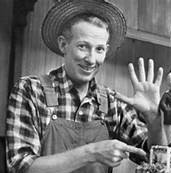
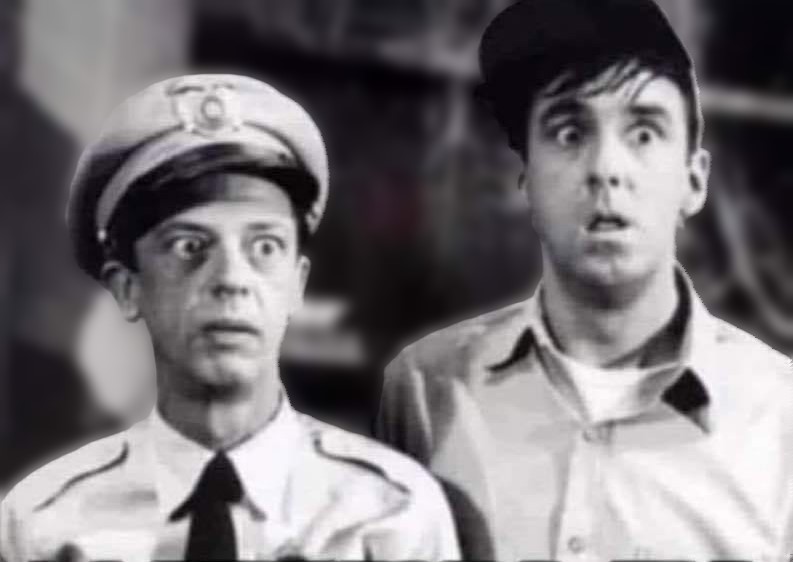
This is not an insult, just a meet-and-greet characterization. His appearance reminded me of Captain Kangaroo’s sidekick, Mr. Green Jeans. Since that childhood TV show would be unfamiliar to most of you, think of Festus (Gunsmoke), Gomer (Mayberry), Jethro (Beverly Hillbillies), Woody (Cheers), Hank (King of the Hill), Darryl, Darryl, and the other Darryl (Newhart).

These television characters were not dumb. Old-fashioned to a fault, they were innocently naïve, out of touch with the bad stuff in this modern world. Most of these characters were noted for being friendly, loyal, and philosophical. Their insightful wisdom usually sounded comedic in its simplicity. Jim fit the part, but it was no act.

Social Development? Jim quickly endeared himself to our church family. He was a regular weekly dinner guest for several families. He mowed lawns and made house repairs for widows which, in return, kept him well-stocked in food. No one in our city ate more desserts than Jim. Pies, cakes, pastries, and cookies. He could have opened a Sweet Shop. Somehow, he retained his lean frame.

Jim ran errands, dug ditches, and put-up fences. He was not afraid of work. He joined the ministries to the homeless and neighborhood outreach. Everyone loved this young man in overalls.

Aversion to Education? Jim was an eager and quick learner. He studied the Bible and asked thoughtful questions. His looks and demeanor were different, but he fit right in with the other preacher interns. Deep thinkers. Sensitive hearts.

My goal for the preacher training school was to deepen their devotion to the Lord Jesus Christ before they embarked on more intense theological studies or careers.

We put them through rigorous reading assignments and challenging discussions. We explored Scripture in-depth. We engaged the young men in ministry to at-risk youth to expand their love for others. Then we tested them.

The tests would cover the latest Biblical book. The interns would need to recall verses and passages and expositional points. These were the best and brightest young men I had been around. The tests were challenging.

Something interesting was revealed during the testing time for the Gospel of John. As the preacher guys recalled Biblical references, Jim’s test recited large passages of the text, word for word. On further investigation, Jim admitted he had memorized the entire book of John, all twenty-one chapters.

I have been to school with all kinds of students. Some were very smart and some were educationally challenged.

Carl did not know which way was right and which was left. He was a very fast running back who scored a lot of touchdowns because this quarterback directionally pointed when I called out the play, Right Twenty-Eight Quick Pitch. Our co-captain, Daryl, was greatly disappointed in his English assignment when he discovered that Shakespeare’s Hamlet was not about football. No, Hamlet is not the same as Helmet…so close and yet so far away.

I also attended college with guys who had perfect college admission scores, but no common sense. One knew Latin and Quantum Physics but failed the basics of etiquette. Another could not organize a dorm function but became our country’s Vice-President.

However, this version of Mr. Green Jeans was the most impressive student I have ever known.

As I continued to quiz Jim, he stated he had memorized the other Biblical books we had studied. At one point, Jim memorized the entire New Testament.

As I got to know Jim better, he revealed why he quit college several times. He would register for the classes, buy the books, and read them all before the first class. When the professor began with an overall introduction and slowly waded through chapter one, it left Jim bored and uninspired.

Jim confessed he saw no reason to continue to go to class to listen to something he had already learned! That certainly bested all my reasons for skipping classes.

Jim read all of the #1 Textbook only to discover he had only begun to mine its truth and treasure. This Book cannot be judged by its cover. It is the Word of God. Its supremacy and sufficiency are unfathomable. Its value and worth are immeasurable.

Life Purpose? The country boy was brilliant. However, the most impressive hidden characteristic was the size of his heart. He was also missionary-minded. He traveled with Charlotte Norman and a church group to Oaxaca, the poorest area of Mexico.

Miss Charlotte was a former Garden Club Society member who gave her heart to Mexico missions, inner-city Porch Church, and women prison ministries. Charlotte’s big heart had a huge impact on Jim.

Jim returned to Oaxaca to spend some extended time helping Victor Castanon with missionary work to the outlying mountainous regions. Victor will someday lead the rejoicing of multitudes of the Mixe Indians gathered around the heavenly throne.

The next time we saw Jim, he was accompanied by his new bride, Maria, Victor’s daughter. Maria is the sweetest, kindest, hardest working young lady anyone could meet. God used Maria to focus Jim on his life’s calling.

Jim came back determined to become a doctor. He and Maria planned to return to Oaxaca to open up a medical clinic in the village, as well as provide assistance to the thousands in the surrounding area without medical care.  

This required Jim to finish his college studies which he did in eighteen months. Then he had two months to study for the medical school entrance test, the MCAT Exam.

The time and the educational challenge seemed impossible, unless you were Mr. Green Jeans with an arrest record for loitering in the backyard gazing at stars.

Jim knocked it out of the park. He finished in the top one percent of all applicants. He could get into any medical school. However, Jim thought it best for him to study medicine in Mexico.

So, Jim passed the medical exam again, only this time in Spanish. Medical education is brutally challenging, even more so in a second language. Jim even attended his classes. Upon the successful completion of his training and intern practice in Mexico. Jim and Maria returned to her hometown where they opened a medical clinic for the poor people of that area.

That Mixe medical clinic was just the book cover. Exploits, dangers, drug cartels, late night medical emergencies, long journeys by burro and on foot, and training preachers are all storybook stuff. They are all written in the heavenly journals.

Jim traveled throughout the mountainous area preaching and doctoring. He once preached one of the best Psalms expositions I have ever heard. I imagine he memorized all of it.

Since those early years, Jim has gained physician certification in the United States. The patients have no idea that this “country doctor” in the big city has one of the most brilliant minds and one of the biggest hearts they will ever encounter. They certainly do not know this doctor was once arrested for stargazing.

There is an old saying, “Do not judge a book by its cover.” It is a metaphorical expression which suggests one should not judge the worth or value of someone or something by its outward appearance alone.

You can’t judge an apple by looking at a tree,

You can’t judge honey by looking at the bee,

You can’t judge a daughter by looking at the mother,

You can’t judge a book by looking at the cover. 

(Don’t Judge a Book by its Cover, sung by Bo Diddly, lyrics by Willie Dixon)

Oh, how often we fail to heed that advice. We look at someone’s outward appearance and quickly form some judgment regarding their character or motives. We check off our social media “like” or “dislike” without listening, without learning, and without loving. That is not how the Lord loves us.

“The LORD does not look at the things people look at. People look at the outward appearance, but the LORD looks at the heart.” (#1 Textbook).

Judging others is not a spiritual calling. Loving others is our universal challenge.

Whether Jim’s steps lead him over sparsely populated mountainous regions or crowded and bloodied emergency rooms or church parking lots, he will most likely greet you with a smile and a “Hey, Brother!” I can guarantee you he will not judge you by your cover.

Let us all be better at not judging others by first impressions. Misjudgments arise when we focus on the color of someone’s skin, their outward dress, or their dialect.

“We must never forget this as a nation: there are no gradations in the image of God. Every man from a treble-white to a bass-black is significant on God’s keyboard precisely because every man is made in the image of God. One day we will learn that. We will know one day that God made us to live together as brothers and to respect the dignity and worth of every man.” (Martin Luther King, Jr.)

“The Gospel is the power of God to change water to wine, death to life! The whole story is about Him. We just get to be vessels carrying the divine glory!” (Dr. Jim McCarty)

Join me in the march to love first and love most. We are vessels carrying the glory of love. When we love like Jesus, we discover a glorious and defining truth. If every human being were a book, every book would have the same book cover. It would say, “Made in the image of God.”

Life is not about outward appearances. It is about love and character and integrity and faithfulness. A heart will tell you much more about a person than appearance.

May we all work more on our inner resources than our outward appearances.

May we give greater value and worth to the inner beauty of others.

And may we find some time in our busy lives to gaze at the stars as we contemplate the greatness of God’s glory, goodness, and love to us.

NEXT YEAR’S PANEL OF JUDGES

??????????

A NEW YEAR REDO

REDO—to do over again, to repeat an action with hopes of better results.

We all have moments we wish we could REDO. Maybe it was last year or an entire lifetime.

REDO. It is a term woven into the fabric of our culture.

The first time I ever heard that word was when my three-year-old son screamed it at a high school football game. The home team kicker had just shanked the extra point kick.

Kyle yelled, “REDO!”

The phrase caught on with the men in our golf group who began to substitute the ‘REDO’ phrase for ‘mulligan,’ a golfing expression for an additional uncounted golf shot to replace the previous mishit one.

My favorite REDO moment occurred at my younger brother’s wedding. Bill and Angie decided to have a small home wedding just as our college-aged dad and mom had done over thirty years earlier. Like our parents, they decided to save the cost of a larger wedding and use the funds to start their new life together as married college students.

The wedding party was just the immediate family, our pastor, and his wife who played the organ. They also saved the cost of a professional photographer.

Our youngest brother insisted he would capture the moment with his new camera. The young teenager

repeatedly rebuffed all photo pointers suggested by Mom and me. He declared several times with the utmost confidence, “I’ve got this!”

Joe positioned himself perfectly to capture the once-in-a-lifetime-moment of the wedding kiss. The wedding ceremony was brief and beautiful. The young couple looked like clueless lovebirds as they joyfully pledged their lifetime of love.

Our pastor smiled and pronounced them husband and wife as he encouraged Bill to kiss his new bride. It was everything a wedding kiss should be…a once-in-a-lifetime-moment to cherish forever.

I vividly remember the click of a camera shutter capturing the occasion. Then, eerily, and noticeably, there was no flash.

THERE WAS NO FLASH!

I know Joe wanted a REDO. Bill and Angie and, especially our mom, wished there were a REDO button in life for moments like this.

I had another reason for wishing I could REDO that moment. I would take a picture of my youngest brother’s facial expression…WITH A FLASH. The image has a permanent place in my memory storage.

“I’ve got this” lives on in family lore!

My college French professor asked me to REDO the one-on-one mid-term test. My one year of high school French at dear old Spiro High did not propel me into an elite foreign language spokesperson.

Our university mandated every first-year student to take a foreign language class. Mine met at 8 AM five days a week. This did not line up with my college freedom plan not to enroll in any classes that began before 11 AM.

I thought I was successful just making it to class. I did not realize the professor’s expectations of moving beyond my social dating usage of “Bonjour” and “Je t’aime” and “Adieu.” Or in Spiro speak, “Hello. I love you. Goodbye.”

I completely bombed the first conversational test. In the middle of my REDO session, the professor shouted, C’est fini.”  She expressed her amazement that I could converse some in French. Then she showed me the “coup de grâce.”

It was the final act of mercy to end my suffering. She explained that some people have a mental block which prevents them from learning a foreign language. She had written a “get out of jail free” note which excused me from the university requirement, which excused me from participation in the 8 AM torture classes.

I could not stop her next words and actions. She admitted she was wrong. She said I could learn when I applied myself. Then she tore up the note and placed it in my hand with a smile of encouragement.

I sat there stunned. I said her first impression was correct. I begged for a REDO.

She replied, “The word is refaire and the answer is absolument pas.”

She stared into my disappointed eyes and whispered, “Absolutely not. You will thank me someday.”

I gazed into the depths of her horned-rimmed glasses and responded softly, “Je t’aime, ma chérie.” 

Our session concluded in similar fashion to the ending of the classic movie, Casablanca. My French teacher repeated Humphry Bogart’s iconic line as Rick and Renault walk off into the fog. “Louis, I think this is the beginning of a beautiful friendship.” 

Her ‘someday’ has never come.

There are many important moments in life I wish I could REDO.

Correct the mistakes. Relive the joys.

REDO the low points. REDO the high points.

REDO the regrets. REDO the cherished memories.

Life is a journey filled with twists, turns, successes, and failures. At times, we all wish for a chance to start over—a spiritual REDO that allows us to move beyond our past mistakes, regrets, and missed opportunities.

The concept of a spiritual REDO is not only possible, but it is also central to God’s relationship with us. God’s willingness to give us a fresh start is an expression of divine grace, mercy, and love.

God’s spiritual REDO is rooted in His character as a loving and forgiving Father. The #1 Textbook records stories of individuals who received second chances—Moses after his anger, David after his affair, Peter after his denial of Christ, and Paul after persecuting the church.

The woman caught in adultery, the emotionally damaged Legion and Mary Magdalene, the socially ruined Samaritan woman at the well, and the little corrupt tax-collector all received the intervention of God’s grace for a new beginning REDO in life.

That is what Jesus told Nicodemus. You need a NEW BEGINNING, a REDO.

Spiritual REDO is not about erasing the past but about redeeming it. God takes our brokenness, pain, and failures, and reshapes them for His glory. It is a total renewal REDO. “Therefore, if anyone is in Christ, he is a new creation. The old has passed away; behold, the new has come” (2 Corinthians 5:17).

God does not hold our past against us. Instead, He calls us to walk in the newness of life, trusting that His plans are good. God encourages us to “forget what lies behind and strain forward to what lies ahead…pressing on toward the purpose God has for each of us (Philippians 3:13-14).

God’s spiritual REDO is a testament to His immeasurable love. No matter how many times we fail, God offers us the chance to begin again. Through His mercy and power, we can experience true transformation and walk in the abundant life He promises.

I am thankful for the Lord’s REDO in my life. God did not just redecorate the outside; He completely restored the inner being into its intended purpose. I have not perfected it all yet; I am still learning.

Thankfully, all the classes do not begin at 8 AM.

Keep your EYES UP! Press on to the Goal. REDO when necessary!

GREAT EXPECTATIONS

Every new year begins with GREAT EXPECTATIONS and usually slides downhill from there.

This year is going to be GREAT!

This year has turned out GOOD!

This year has been OK!

Then about the time this year becomes the WORST, someone hits the recycle button and its HAPPY NEW YEAR with GREAT EXPECTATIONS!

Charles Dickens’ novel masterpiece Great Expectations examines social class, ambition, love, and redemption through Pip’s journey, showing that loyalty and compassion matter more than wealth or status.

True “great expectations” become real experiences through relationships of cultivated kindness.

Israel and the world had GREAT EXPECTATIONS of a coming King, a Messiah, a Savior. The Christ is coming and he shall be great!

And yet…He was much different from the world’s “great expectations.”

Take a moment to reflect on his relationships of cultivated kindness and his effect on those whose “great expectations” were fading fast or lost entirely.

  • A desperate father grieving over his dying daughter
  • The ill mother of a friend
  • A mother mourning for her dead son
  • A blind beggar
  • Two sisters weeping over losing their brother
  • A man who lost his mind, career, and family
  • An adulterous woman
  • An emotionally out of control woman
  • A paralyzed young man
  • A man with a crippled arm
  • A man outcast from society because of a horrible disease
  • A scandalous woman from the wrong side of the tracks
  • A confused aristocrat
  • A war-torn soldier
  • A condescending religious scholar
  • A tax collector
  • A tax cheater
  • A fearful doubter
  • A drowning man
  • A frustrated cripple
  • A statistically pragmatic nerd
  • A meddling mother
  • Two proud self-serving brothers
  • A fishless fisherman
  • A woman overwhelmed with her work
  • A dying thief
  • A prodigal son
  • An arrogant persecutor
  • A man crying in the wilderness
  • A man wailing in the cemetery
  • A woman sobbing at a deathbed
  • A little boy who surrendered his lunch
  • An older woman who gave away her last penny
  • Some dirty-feet travelers
  • A guy with a withered hand
  • A young inquisitive outdoorsmen
  • A contemplative young man sitting under a tree
  • A loving cousin
  • An injured man with a detached ear
  • A brash, boastful know-it-all
  • Slow learners
  • Non-believing family members
  • A rule-keeper in need of freedom
  • A misguided patriotic leader
  • A confused popular teacher
  • A group of men infected with a disabling disease
  • A man with a hopeless, incurable condition
  • A traitor
  • Religious snobs
  • Racially prejudiced socialites
  • Legal experts sitting on their high horses
  • A self-righteous businessman
  • An extraordinarily rich lawyer who did not have a clue
  • The sick servant of a Roman centurion
  • The unnamed woman hated by the indignant religious guys
  • The three religious guys, too busy with other things for full commitment
  • A man who lost control of his life
  • A mother with an out-of-control daughter
  • A father caring for his special-challenged son
  • The man born blind
  • The brothers arguing over their inheritance
  • The young politician
  • A disloyal friend
  • The forgiven prostitute
  • The little rich crook up in the tree
  • Sinners
  • You and me

Jesus treated everyone as having worth and value because they were created in the image of God.

God gave us the greatest gift, the Son of the Most High.

At his birth, the heavenly angelic host showered him with adoration. Poor shepherds came from their fields and flocks to worship him. Wise men brought gifts for a king.

The world changed that night…and so did our GREAT EXPECTATIONS.

Jesus came to live with us, love us, serve us, die for us, and raise us to new life and a heavenly home where it will take all the coming ages of eternity for God to shower us with His immeasurably limitless and infinitely endless goodness (Ephesians 2:7).

Someday we will experience all God is able to do which will exceed far beyond all we can ask, think, or even imagine. It will take God all of eternity to show us the fulfillment of the GREAT EXPECTATIONS promised in God’s Word.

The story of our earthly life will be highly edited. The great, good, ok, not so good, most painful, and worst experiences will still be part of the story, but we will be freed from the heavy weightiness of this lifetime’s gravity.

We will not carry any emotional baggage into heaven, just memories colored in GREAT EXPECTATIONS of everlasting joy and limitless love.

We will see clearly that Jesus was always with us and for us in every new year…and now infinitely forever.

GREAT EXPECTATIONS!

O come let us adore Him this New Year…CHRIST THE LORD!

HAPPY NEW YEAR! EYES UP!

MAY YOUR BLESSINGS EXCEED THE GREAT EXPECTATIONS OF YOUR DREAMS!

A CHRISTMAS LOVE LETTER

by REX BLANKENSHIP

Oh, the Love of Christ!
Without beginning.
Without ending.
Without interruption.
Without limits.

Relentless. Uncontainable. Inexhaustible.

It created a beautiful universe.
It gives life.
God with us.

Oh, the Love of Christ!

Sleeps in a stable.
Hangs on a cross.
Perfumes an empty tomb.
Glorifies a heavenly throne.

It shines on every face of every race
living at every pace in every space.

Love so marvelous! Love so wonderful! Love for me. A sinner. A rebel. A flawed, fallen, failure.

Oh, the Love of Christ!

It fills the mind with wonder yet surpasses understanding.
Its width exceeds the immeasurable distance of the east from the west.
Its length stretches far beyond infinity.
Its height transcends incomprehensible.
Its depth plunges lower than unfathomable.

Awe. Amazement. Admiration. Appreciation.

Its forgiveness leaves no blemish and no trace.
Its gift floods the heart with love for God and others.
It always stretches for higher levels.
It incessantly overflows beyond all boundaries.

Engulfs families.
Extends friendships.
Embraces differences.
Encompasses enemies.

Heals hurts.
Breaks barriers.

Oh, the Love of Christ!

It’s the Hope of Peace for the Separated. The Scattered. The Stressed. The Storm-tossed.

It’s the Heart of Compassion for the Suffering.
The Sick.
The Sad.
The Sorrowful.

Unsurpassed Goodness.
The storm “clouds you so much dread,
Soon will break with blessings on your head.”

Oh, the Love of Christ!

The Last are Made First.
The Least are Most Favored.
The Lost are Mercifully Found.
From every kindred, tongue, tribe, and nation.

It welcomes us into the basic Two-Step of its Divine Dance.
LOVE FIRST. LOVE MOST.


Oh, the Love of Christ !!!

Jesus loves me!
Jesus loves you!

Praying I will Learn more and Love better.
Debate less. Judge even less. Condemn never.

Merry Christmas to you and yours!
Thanks for blessing my life.

DYSFUNCTIONAL FAMILY CHRISTMAS (Part 2)

All families are ‘dysfunctional.’ They just differ in degree of dysfunctionality.

Jesus had a long history of family dysfunction.

A long time ago in a Galilee far, far away…a Star appeared over the place a child was born.

Jesus’ family Christmas story is chronicled in Matthew 1, the gospel that serves as a swinging gate between the Old and New Testaments. Jesus is presented as the Christ, the Messiah, the King of Kings.

In the middle of Matthew’s gospel is the big question asked by Jesus of his followers. “Who do you say I am?”

Peter responded, “You are the Christ, the Son of the Living God.”

The Christmas story can be summarized in that glorious declaration, “God is with us.” The Creator of the universe became a person to live among us, to die for us, to dwell in us, and to reign over us.

It is no accident that Matthew’s account begins with Jesus’ earthly family tree, a very dysfunctional Christmas family.

Matthew had a Jewish heritage and a professional career as a tax collector for the Roman government. That made him very familiar with the Biblical prophecy and the Jewish family lineage connected to the promised Christ.

Interestingly, we usually skip over this introductory section in Matthew’s account of the birth of Jesus. Why? The list of names is long and boring. This genealogical version includes forty-seven names of forty-two generations. We do not know these people.

It is similar to sitting through a graduation ceremony where your main interest is one person. Your attention span is directly linked to where his/her name lines up in the alphabet. We treat this Scriptural section like the fast-forwarded credits at the end of a movie.

Matthew’s account goes back to Abraham. Luke’s records go back to Adam. John traces the family story back to the beginning with God.

The family tree could be labeled with the movie title, The Good, the Bad, and the Ugly.

Follow along as Aunt Savannah reads us their stories from the #1 Christmas Book.

  • Abraham-the father of our faith. His nickname might have been Pinocchio, because he always lied to save his hide; but he believed God. He had a lot of skeletons in his closet that were not hidden from heaven’s view. The divinely edited version calls Abraham “the friend of God.”
  • Isaac, the son of Abraham—He was used as a picture of the coming Son of God who would be sacrificed in our place in order to save us. As a dad, Isaac foolishly blessed the wrong son.
  • Jacob, the con man—His name meant “trickster or pretender.” He was a perpetual liar and cheater, but this heavenly edited version reminds us God gave him a new name with a new blessing. He and his descendants would be called Israel, the Prince and People of God. Note: There was an earlier time that no one wanted to be linked to that family tree of liars, fools, and con men. By Matthew’s time, one had to be from the lineage of Abraham, Isaac, and Jacob to have any “street cred.”
  • Judah and his brothers were the twelve patriarch tree limbs of the family tree. Family get-togethers resembled using a blender without the top. These great family markers were men of jealousy, rage, and revenge. They were as unreliable as a weather forecast on April Fool’s Day. The guys sold their brother, Joseph, into slavery and lied to their father that he had been murdered.
  • Perez and Zerah were sons of Judah. Their mother was Tamar, a gossip tabloid headliner.
  • Tamar-Here is the first woman named in the family tree. That in and of itself was considered repulsive to the Jewish patriarchal tradition. Her scandalous story needed editing to hide her unwed pregnancy as the result of an immoral relationship with her father-in-law built on deception, prostitution, and shame. The flaws and stains in her third-marriage scandal had to be silenced from the tabloid gossip headlines. Nobody wanted to talk about Tamar. (Note: I imagine Tamar was cut from the early social media family photos.)
  • Next comes a bunch of hard-to-pronounce names which we would all want to skip over for the sake of brevity and disinterest unless one of them was your grandfather who was a military veteran. You would be angry with the speaker who failed to recognize his contribution.
  • Rahab was the wife of Salmon—This is an attention getter in the family storyline. Look her up on Wikipedia. Rahab was a former prostitute, a street hooker, a harlot. She was Julia Roberts’ Pretty Woman. She believed God. The Lord used her to help God’s people take down the mighty fortress of Jericho. She was rescued by a scarlet thread, not a prince in his convertible. I am certain she was a woman of interest. Now, which one is she in the picture?
  • Rahab gave birth to Boaz who would become a successful and kind businessman. Boaz married Ruth, the outsider of this family. She was a foreigner from the country the entire family hated. Ruth was also a poor, grieving widow. She did not start out as a media darling or a welcomed addition to the family. Ruth was a footnote in the family story until the birth of her great-grandson, David.
  • David—the little shepherd boy, the giant killer, the songwriter, the warrior king. The poster child of the family also needed some editing to his story because of the one standing beside him in the family photo keepsake. Everyone wanted to see what she looked like.
  • Bathsheba—David had an adulterous affair with the married Bathsheba and then ordered her husband murdered. However, David’s character is forever written in God’s Word as “a man after God’s own heart.”

Note: Do you see a pattern here in this family tree? All these people related to Jesus have their life stories edited to a good ending. Their parts in the family story are recorded to give the rest of us encouragement and hope.

BEING RELATED TO JESUS CHANGES YOUR STORY TO GOOD. The bad parts are erased, the suffering parts are useful, and the worst actions are covered in the family portrait by the blood of Jesus.

There were fourteen generations to David and then fourteen more to Jesus.

  • Solomon, the son of David’s adulterous affair, became the wisest and wealthiest king in all of history. His mystifying grandeur was accompanied by an exploration into the foolish world of vanity.
  • We will skip the rest of the names because of time. They carried labels such as rebel, slave, exiled, evil, half-hearted, unfaithful, idol worshiper, good guy. Then, there is the pogo stick king, Jumping Jehosaphat.

Look them up. Learn their story. It helps me feel better about being related to the notorious robber, “Pretty Boy” Floyd.

Jesus’ immediate family must have had some dysfunctional moments. His brothers “did not believe in Him” (john 7:5) even though they were recipients of his selfless love and knew from their mother about the Star’s appearance at his birth.

They even considered him to be crazy, a lunatic instead of the Lord. They claimed he was “out of his mind” (Mark 3:21). Have you ever heard similar words? Irrational? Hypocritical? Judgmental? Unloving? Irreconcilable? Crazy?

Jesus was well aware of the dysfunctional faith in his family. Jesus referred to himself as “a prophet is without honor in his hometown and even in his own family” (Matthew 13:57). I wonder if he wanted to be home for Christmas.

It took years for the unbelief of family members to change. That means there is still hope for you and your family. The story is still being written, and God always writes the last chapter.

Do not stop praying. Do not stop hoping. Do not stop loving.

History is what it is. It cannot be rewritten. You and I cannot change where we came from. We cannot change our family members, although some try. We cannot change our family experiences, good or bad.

However, by God’s grace, we can stand in the family picture next to Jesus. His Person creates a lens filter through which others see us in a more favorable light.

Our names are written in the family story with descriptions like “child of God” or “heroine of the faith”or “follower of Jesus”or “redeemed from slavery to sin” or “dear to God’s Heart” or “beloved family member” or ““the one whom Jesus is not ashamed to be his/her brother.” Some of you are described as “a bride adorned in beauty”or “a good soldier” or “the righteous one.”

Look at you in God’s family photo. “The apple of his eye…His vessel of honor…the dearly beloved…the called and chosen…the child of promise…His crown of glory.”

What about all those bad moments in your life? The skeleton in the closet? The moment of unfaithfulness? The bad attitude and even worse actions? What about the mistakes you made and the messes you caused?

What about family conflicts? What about those moments where you fell and failed? What about when you were the last, the least, and the lowest?

None of that is in the family Christmas story!

There is your picture and your name right next to Jesus. You are called “God’s joy…a new creation…God’s light in this world…the perfection of beauty…the one blessed forever…God’s masterpiece!”

Step back and see the big picture. Jesus LIVES in you to LEAD you to others He intends to LOVE through you.

God carries on His perfect plan with imperfect people. Jesus brings about individual change and generational change. The mistakes lead to miracles. The big messes produce the majestic colors of God’s masterpiece.

Take this to heart:

WE ARE ALL MORE SINFUL THAN WE COULD EVER DARE TO IMAGINE and WE ARE ALL MORE LOVED AND ACCEPTED AND BLESSED THAN WE COULD EVER DARE TO HOPE.

THAT IS OUR FAMILY CHRISTMAS STORY!

Here is our Christmas message:

LOVE ONE ANOTHER!

LOVE FIRST! LOVE MOST!

I pray you hear the Christmas Bells ringing the sounds of Hope and Love.

DYSFUNCTIONAL FAMILY CHRISTMAS (Part 1)

Jesus had a long history of family dysfunction. You might too. Before we discuss these issues, let me introduce you to some church families I met one Christmas season.

Once upon a time, I was asked to speak at a church Christmas festival in an unnamed town in the state of chaos. Two large families left a lasting impact. To maintain confidentiality for those now under FBI protective custody, I will refer to them as the Hatfields and the McCoys.

These feuding families were not the actual descendants from the frosty hollers of Appalachia. They also did not show characteristics of any direct links to the three wise men from the Orient.

The pastor waited until after the celebratory fistfight to inform me that the Hatfields were notorious for their wild tempers and questionable fruitcake concoctions, while the McCoys were noted for their stubbornness and pecan-pie petty pride.

Every two years, the feuding families alternated firing the current pastor and selecting the subsequent one. So, every pastor arrived to the church celebrated and condemned, awaiting execution by accusation.

The current pastor had his bags packed. Apparently, his suggestion to cancel the church Christmas festival was the last straw. As one family lamented his holiday departure, the other joyfully prepared for a new season.

The only thing these two clans agreed on was that the other family was loonier than a squirrel in a moonshine still.

Christmas should have been a time for peace, but not in this church. The families arrived armed with casseroles and a box full of grievances. The tension in the air was thicker than the gravy on the mashed potatoes. The Christmas tree hid behind the piano awaiting the impending drama.

No one warned me. In fact, all the families greeted me as if I were the driver of Santa’s sleigh, loaded with presents for every boy and girl.

I shared the Biblical reason for the most important thing in life no matter what the season. A few people from different sides of the church yelled “Amen.” At first, I was encouraged, then worried. I quickly finished with a closing prayer.

The “Amen” adulations quickly evolved into a shouting war of words. “Preach it, brother; they need to hear this!” That ignited a response of “Hypocrite!” which was countered by another name for Jack’s Donkey!

The atmosphere cooled for the children’s Christmas play. It was not a good idea that Joseph and Mary came from different tribes, but probably non-negotiable.

The innkeeper’s bad attitude felt real and not like acting.

The kings and the shepherds were not talking. No peace accord was on the table.

The angels had frowns larger than their tinsel halos. While the shepherds rounded up their stray cats, the three kings brought gifts to the plastic baby in the manger. There was fruitcake, pecan pie, and a half-eaten candy cane.

The peace was temporary. It was only intermission!

Someone struck up the band, and the music entertainment took center stage. The competition returned with the carols.

The Hatfield kids sang ‘Jingle Bells’ at a tempo that would make a bluegrass band rush and blush. The McCoy angelic host countered with a moaning version of ‘Silent Night’ that lasted over twenty minutes.

The soft sounds of ‘Away in the Manger’ came next, but it was not the cattle who were loudly ‘lowing.’ I think it was Granny Hatfield. They begged Uncle Leon to sing his version of ‘Noel.” (My mind was flooded with the lyrics from my friend Jeff’s version of “Noel spelled backwards is Leon.”)

Next came the gift exchange. The feuding heightened as one side repetitively complained it should have been a Secret Santa gift-swap. As the back-and-forth escalated in volume and intensity, each gift was returned or thrown in the trash.

By dessert time, all hopes of peace melted faster than the Jell-O mold. Sister Grace stormed out the back door and left the building with Elvis. Cousin Cletus tried to spike the punch with a homemade bottle of Moonshine Kindness.

Grandpa Herman pulled off the snowman’s corn cob pipe, stuck it in his mouth, and began sarcastically wailing, “We Wish You a Merry Christmas.”

Aunt Gladys snatched the pipe out of his mouth and shouted, “No Smoking! The Hatfield’s dry fruitcake is highly flammable.”

Well, the insulted Mother Mary Fruitcake responded by calling the pecan pie, “tasteless garbage.” Her pecan-pie toss in the trash missed its target and splattered across the tile floor.

That was the spark that lit the keg of explosives. The ladies shoved one another.

Someone rang the bell and the fisticuffs began flying. So did a few fruitcakes and pecan pies!

Some cheered as others tried to stop the fight, slipping and sliding on the smashed pecan pie. Thankfully, a few gained enough traction on the hardened fruitcake to separate the scuffling squaws.

Loud curses drowned out the grand finale piano sounds of “O Holy Night.”

Some wept. Some laughed. Some left. Strangely, no one looked surprised. Except me. This was a horror show.

Eventually, the chaotic flare-up settled into a time of mutual confusion over what to do next.

The pastor had everyone join hands as he prayed for “Peace on Earth and Good Will to All Men.” Everyone echoed an “Amen. God bless, everyone.”

The pastor shook my hand as he informed me that the departed Sister Grace was supposed to give me the honorarium check. He would leave a note for the next pastor.

“Amazing Grace, how sweet the sound.” I have been waiting ten thousand years with no less days to receive my pay than when this had first begun.

My counselor friend, Jeff, once told me, “All families are ‘dysfunctional.’ They just differ in degree of dysfunctionality.”

In Part 2 we will consider Jesus’ dysfunctional family Christmas story as chronicled in Matthew 1, and where you fit in through all of this.

The Christmas story can be summarized in that glorious declaration, “God is with us.” The Creator of the universe became a person to live among us, to die for us, to dwell in us, and to reign over us.

Families face conflicts behind closed doors. There is tension in times of stress and hurt. Perhaps you are very familiar with those feelings.

Back in the times of the American Civil War, Henry Wadsworth Longfellow penned his feelings of grief as well as hope. His country was politically divided by the war. His wife had died in a tragic accident. His son was brutally wounded in battle.

With the thunderous sounds of cannons pounding in his thoughts, grief filling his hearts over his household torn apart by conflicts within and without, he heard some Christmas Bells. He wrote this poem.

And in despair I bowed my head;
“There is no peace on earth,” I said;
    “For hate is strong,
    And mocks the song 
Of peace on earth, good-will to men!”

Then pealed the bells more loud and deep:
“God is not dead, nor doth He sleep;
    The Wrong shall fail,
    The Right prevail,

With peace on earth, good-will to men. (Christmas Bells)

God is alive! God is at work! Do not despair.

Political divisions, family dysfunctions, conflicts, problems, troubles, and hate might be strong. But they will not prevail. THERE IS HOPE!

Step back and see the big picture.

God carries on His perfect plan with imperfect people. Jesus brings about individual change and generational change. The mistakes lead to miracles. The big messes produce the majestic colors of God’s masterpiece.

Take this to heart. We have a family Christmas story that is beautiful!

(Much more of that Biblical truth in Part 2.)

This is our Christmas message:

LOVE ONE ANOTHER!

LOVE FIRST! LOVE MOST!

I pray you hear the Christmas Bells ringing Hope and Love.

THE NEVER-ENDING WAIT AT THE DOCTOR’S OFFICE

Patience is waiting with a smile. At least that is what I teach my grandchildren.

Surely, you have experienced the never-ending wait in a doctor’s office.

If patience is a virtue, then the waiting room at my doctor’s office is the Vatican of self-restraint. My journey began at 9:00 AM. I arrived early. I had preregistered. Still, I was given a clipboard with questions to answer. I took my seat and waited for the nurse to call my name.

Little did I know, I was about to enter a time vortex where clocks are merely decorative.

The receptionist, a cheerful gatekeeper, assured me the doctor would be with me shortly. I soon learned that “shortly” in medical-speak translates to “before the next leap year.”

Settling in, I skimmed through a stack of magazines so old that the hottest tech gadget was the flip phone and fashion tips included bell bottoms. The celebrity star was Elvis. I am pretty certain Elvis had already left the building.

Across from me, a toddler constructed a Lego fortress, while a retiree completed an entire crossword puzzle book. I exchanged sympathetic glances with fellow patient waiters or waiting patients, each of us silently agreeing never to book another early appointment or look at the other person again.

Every time the nurse opened the door and called a name, we all sat up straighter, hope flickering in our eyes, only to be crushed as someone else shuffled in.

The suspense was palpable. Was this a waiting room or an audition for “Survivor: Healthcare Edition”?

I rose to my feet to help an elderly woman get through the office door while carrying her super-sized carry-on purse, Stanley cup drink, cell phone, and oxygen tank. She was appreciative. She said it was very kind of an “elderly man” to be so courteous. Next time, this old man will not notice you, lady.

What followed her insensitive comment was not part of my medical exam package. After her detailed weather forecast, she continued to engage me in conversation about politics and grocery prices. We were wasting TIME while TIME stood still.

Lady, I do not want to talk. I helped you get through the door so I can see my doctor.

Eventually, after memorizing the pattern of ceiling tiles and considering a career as a Tik Tok social influencer, I was summoned, not to see the doctor, but to reaffirm my insurance company. I asked if I might be eligible for a mail-in rebate to help with the snack costs of my extended wait time.

TIME. That is an interesting word. It has no meaning in a doctor’s office.

TIME seemed to stretch on, morphing from minutes to light years, as my phone battery dwindled and my sense of life purpose slowly eroded. I began to believe I aged another year sitting under the fluorescent lights, contemplating the mysteries of the universe and the reason for plastic plants.

By the time I finally heard my name, I half-expected to receive a congratulatory certificate for surviving the marathon wait and to be handed a commemorative “I love my doctor” coffee mug.

I sat in the chilly exam room, shivering in my paper gown, desperately trying not to crinkle it too loudly every time I shifted. The wall clock ticked on, its hands moving slower than the DMV line. I was wrong. TIME had stopped.

My best friend is a doctor and the only time he made me wait was while he was putting for an eagle on the golf course. Glad he made it because we needed to hurry to my wedding!

Finally, Dr. Fairway strolled into the exam room sporting a golf cap and a golf tee tucked above his ear. I could not help but ask if he had been on the course that morning, but he just smiled mysteriously.

To my confusion, he started going over my lab results using the back of a golf scorecard, shaking his head and muttering that my cholesterol was ‘two-over par’ and the iron shots did not lower my numbers.

The Doctor stepped out of the room. I assumed he was just grabbing my chart. But after ten more minutes, I began to wonder if he was reading War and Peace in the supply closet.

“Ain’t It Funny How TIME Slips Away?” (Willie Nelson)

When twenty minutes passed, I was convinced he had gone home, changed into pajamas, and was binge-watching TV medical dramas for inspiration.

As the minutes slowly ticked by, the doctor returned accompanied by the nurse. They spoke in hushed tones about the complications. I overheard mention of higher handicap risks because of too many strokes and using his slice to cut corners.

The doctor remarked about so much water that he did not have enough balls to finish. He asked the nurse to pray for an extra driver and a miracle.

My anxiety about needing surgery grew.

After Dr. Fairway took a couple of practice swings with his stethoscope, he yelled. “Fore!” My fears intensified when he mentioned consulting another professional before the condition worsened.

He suspected it was a severe case of the Yips, a nerve disorder. Shaking his head in frustration, the doctor lamented about too many lip-outs. He stared at the nurse and declared he should have let the last one die in the hole!

That was the last straw! I could not wait any longer. This patient and his patience stormed out the door…until a sudden breeze reminded me my hospital gown was wide open.

Back to waiting with a smile.

The doctor felt I was surviving well. He thought my patience was running a little thin. He prescribed something for an attitude adjustment.

I asked him how long it would take to see results. He simply shrugged, saying, “Be patient. These things require TIME.”

TIME.

What is TIME? Does anyone really know what TIME it is? (title of a Chicago song).

TIME is both a scientific tool and a philosophical topic for understanding measurement in the sun’s movement, the seasons’ changes, and human aging.

One thing that unites all humans is our complicated relationship with TIME.

TIME is the only dimension that can both heal all wounds and give too many wrinkles. TIME plays tricks on all of us. Is it TIME already? Where did the TIME go?

Sometimes TIME stands still. On other occasions, TIME runs too fast or too slow. Things take TIME but never give back TIME lost. TIME always runs out except when it goes into overtime.

How does the weekend sprint by like it is training for the Olympics, while Monday mornings move more slowly than a snail doing yoga?

Scientists say TIME is constant, but I am convinced it is powered by caffeine during holidays and by molasses during meetings.

TIME might be a super-hero. It flies by hyper-fast in a heated rush when you are enjoying some celebratory occasion. Then it suddenly stops, frozen in its tracks, while you hope for a quick end to an unpleasant experience.

How does TIME drag its feet when you are waiting for something important—like a package delivery, or your turn at the DMV?

Why does five minutes in a dentist’s chair feel longer than the entirety of high school? Why is a pizza in the microwave for thirty seconds not the same as thirty seconds at a stoplight?

Then there is the phenomenon of TIME stopping altogether. This usually happens at the most inconvenient moments, like when you meet someone from your past but do not remember their name. TIME does not actually stop; it hovers, taunting you, refusing to budge until the awkwardness reaches critical mass.

But the greatest trick TIME pulls is making you think you have plenty of it—until you don’t. “I’ll do it later,” we say, only to discover that “later” sneaks up on us faster than socks disappear in the dryer.

In the end, TIME is the ultimate comedian: unpredictable, relentless. All we can do is laugh, cherish the fast moments, survive the slow ones, and try not to get stuck when time decides to freeze…like in a doctor’s office when the gown blows open!


1. Understand Time as a Precious Gift from God.

“So teach us to number our days, that we may gain a heart of wisdom” (Psalm 90:12).

Our days are limited and precious. The #1 Textbook offers timeless wisdom about how we should view, use, and appreciate our Time in this life. By asking God to help us “number our days,” we acknowledge our mortality, our dependence, and our divine gift that has intention and purpose.


2. Recognize the Importance of the Present.

“This is the day that the Lord has made; let us rejoice and be glad in it”  (Psalm 118:24).

Rather than dwelling on the past or worrying about the future, the Bible urges us to embrace the present. Each day is an opportunity to experience gratitude and joy, recognizing it as a unique creation of God. Each moment is an opportunity to love God and love others in this Time Machine.


3. Enjoy the Seasons of Life.

“For everything there is a season, and a time for every matter under heaven” (Ecclesiastes 3:1).

Life is a series of seasons, each with its own challenges and blessings. What season of life are you in? Understanding God has planned this Time helps us accept change, experience spiritual growth through transitions, and trust that God has a purpose for every stage of our journey.


4. Make the Most of Every Opportunity.

“Look carefully then how you walk, not as unwise but as wise, making the best use of the time, because the days are evil” (Ephesians 5:15-16).

We are called to live wisely and not waste our time. This means being intentional in our actions, prioritizing what matters, and seeking to use our time for good, even when the world presents distractions or difficulties. It means finding joy in this time…right now.


5. Be Patient and Trust in God’s Timing.

“God has made everything beautiful in its time” (Ecclesiastes 3:11).

We want things to happen according to our schedule. The #1 Textbook teaches us to trust in God’s timing, believing that everything will unfold as it should, and that beauty and purpose can be found in waiting…waiting with a smile!


TIME. Appreciate each Moment.

Use your Time Wisely. Cherish the Good Times. Edit the Difficult Times.

Learn from the Teaching Times. Trust God’s Perfect Timing.

EYES UP…ALL THE TIME!

I LOVE YOU…MORE EACH TIME!

FALLING LEAVES…BLOWING IN THE WIND

It was a gusty autumn afternoon, and the leaves had places to be. Forget lazy drifting—these were drama queens in disguise, skydiving through the air with all the urgency of latecomers at a Black Friday sale.

Some leaves were tumbling over one another in a chaotic conga line, while others flapped and flailed like kids discovering jazz hands.

One particularly ambitious leaf attempted a daring leap from the curb, only to get snagged on a rolling tire and hitch a ride down the block, clinging on as if auditioning for an action movie.

A cluster of leaves attempted to storm our front porch but were foiled by a closed door and ended up plastered against the welcome mat, forming a makeshift, crunchy welcome committee.

All the while, the wind orchestrated this leafy ballet with wild abandon, sending the autumn leaves somersaulting into gutters and providing a blanket of leaves to cover my neighbors’ lawns.

My house has one large tree, the only one in the neighborhood—so my issue with falling leaves is minor compared to what others experience.

My brother’s wife rakes their large yard to protect the pecan harvest while he remains busy coaching football. Thankfully, his team is still in the playoffs.

My ninety-four-year-old mother-in-law lives on a cul-de-sac that is mostly out of view from others. She keeps her yard looking so immaculate that one would think she catches each leaf before it hits the ground.

Raking or mulching leaves from my single tree is not hard—just a minor annoyance.

I am faced with the challenge of being a considerate neighbor to those who reside nearby. My neighbors invest significant effort into maintaining their impeccably landscaped yards. Unfortunately, fallen leaves from my property often accumulate in their well-kept lawns.

That identifies me as the Neighborhood Nuisance, the person causing inconvenience and annoyance.

What can I do to be a good neighbor?

  1. Do you want a good neighbor? Call State Farm for help. I cannot tell you the number of times their slogan, “Like a good neighbor, they will be there” comes up in my conversations with their less than neighborly representatives about insurance claims—not lawn care.

2. Wait for the wind to change directions. How terrible is it that I check weather forecasts to coordinate my non-raking schedule?

3. Pray for stronger wind gusts to scatter my leaves several blocks away.

4. Share with my neighbor about the fascinating aspects of how the sovereign Creator God:

  • Designed Trees with unique leaf structures.
  • Specifically located each tree in its special environment.
  • Planned the four seasons.
  • Changes the color of the leaves.
  • Controls the wind’s direction and force.
  • Influences the movement and fall of each leaf.
  • Establishes the exact landing spot for each leaf in a manner more precise than any NASA space return.
  • Does everything wise, right, and good.
  • Wonders why my neighbor would complain about where the leaves fall.
  •  Questions why I would mess with His design.

I thought it was best to have that conversation while the song lyrics floated in the air from my headphones.

They say that all good things must end someday
Autumn leaves must fall
But don’t you know that it hurts me so
to say goodbye to you (neighbor and leaves)
Wish you didn’t have to go
No, no, no, no

However, in the chill of the moment, I chose to compose a text to my neighbor explaining my response to his dilemma.

__________________________________________________________________

Dear Neighbor,

I see you standing on your pristine lawn, brow furrowed at the golden blanket of my tree’s leaves that have, quite inexplicably, migrated to your side of the property line. Before you reach for your phone call to the Homeowners Association or assemble a leaf tribunal, allow me to offer a most reasonable explanation.

My tree is a generous soul, wishing to share its autumnal bounty with the world. But alas, I am not its only beneficiary. The real culprit here is none other than Mother Nature’s most mischievous child: the wind.

It is the wind who, with glee and no sense of property boundaries, lifted my leaves in the dead of night and deposited them like confetti at your doorstep. I assure you my weekly raking schedule was no match for her gusty ambitions.

Now, I know what you are thinking: shouldn’t I be responsible for these wayward leaves? But let us turn to the ancient wisdom of property law (and neighborhood etiquette): once a leaf detaches from its branch and takes flight, it becomes a free agent, a citizen of the world, belonging to no one, answerable to no one.

If the wind has chosen your lawn as its canvas, who am I to interfere with the artistry of nature and the sovereignty of its Creator? It is not as if I am deliberately moving all these fallen leaves into your yard, which I would if I could.

Next time my tree’s leaves end up on your property, I promise to refrain from all celebratory expressions. In the spirit of harmonious peace, would you please delete your video of me dancing around my lawn with my rake held in celebration above my head?

Rather than attributing blame, I suggest we recognize the powerful influence of the wind and consider that raking leaves may not be as essential as often assumed. It is beneficial to appreciate the natural protective and fertilizing properties of fallen leaves while collectively hoping they may all be carried further south by prevailing winds.

Blowing in the Wind,

Your loving neighbor

_________________________________________________________________________________

Do you ever do crazy things like this? I come from a long line of family members who historically draft truthful, but inappropriate, letters of protest or complaint that should never be sent to the intended recipients. Never.

Thankful to spousal editing, most are discarded in the trash. A few are kept in a desk, just in case the wind shifts.

Write it. Read it. Delete it.

For this Windy Wisdom, the decision was made to consider the #1 Textbook instead of the proposed text to my neighbor.

Autumn’s shedding leaves provide a striking metaphor for spiritual growth, symbolizing how we adapt to life’s unpredictable changes.

“Like autumn leaves, we wither and fall, and our sins sweep us away like the wind” (Isaiah 64:6).

This verse poetically compares human frailty and the fleeting brevity of life to autumn leaves fading and falling, blown away by the wind.

Fallen leaves drifting in the wind reflect our experience of uncertainty, loss, and change.

Just as leaves detach from their branches, there are moments in life when God calls us to let go—of comfort, expectations, or even past relationships.

A spiritual lesson contrasting the confidence of faith to “blowing in the wind” is recorded in James 1:6:

Be sure that your faith is in God alone. Do not waver, for a person with divided loyalty is as unsettled as a wave of the sea that is blown and tossed by the wind.

The metaphor of wind to convey instability and uncertainty effectively underscores how doubt can leave individuals feeling unsettled and without clear direction, resembling autumn leaves cast adrift by the wind.

True faith not only survives but thrives through wind-blown changes. Unexpected challenges, undesired losses, and messed-up opportunities require adaptation.

Rather than resisting these forces or finding ourselves defeated by them, the process of spiritual growth invites us to surrender anew to God’s sovereign goodness, trusting that letting go is not an end, but a transition to something new.

Through it all, God never lets us go. He always gives us strength for today and bright hope for all our tomorrows.

The journey of a leaf does not end when it falls; instead, it becomes part of the earth, nourishing new life in the seasons to come. Similarly, the changes and losses position us to be a bigger blessing to others.

Spiritual growth is not a one-size-fits-all journey, but a deeply individual process shaped by life’s unpredictable winds. Each leaf uniquely dances along its divinely designed path. When the wind blows, the person of faith grows stronger, wiser, and more compassionate toward others.

Letting go of the past and embracing what lies ahead is a vital part of our spiritual journey. Rather than viewing loss or change as defeat, we can see those moments as invitations to deeper trust and renewed purpose.

Press on through the seasons of life. Each chapter is entertaining in its beauty, helpful in its changes, and faith-growing in its unpredictability.

With each fallen leaf, be reminded:

  • We will always face circumstances beyond our control.
  • We can always find renewal during change.
  • We will always become a better blessing to others when we live by faith.

Trust God in the cycles of life. Each new season is filled with beauty and blessings.

And each changing circumstance enlarges your opportunity to LOVE YOUR NEIGHBOR AS YOURSELF.

There is the answer to all the problems of every season of life. Love God by loving my neighbor.

I am going outside to rake the wayward leaves back into my yard. I will save the text message for another windy day.

Winter is only months away.

EYES UP!

How many times can a man turn his head
And pretend that he just doesn’t see
The answer, my friend, is blowin’ in the wind
The answer is blowin’ in the wind

THE LEANING TOWER of Broken Arrow

IS THE NEW WATER TOWER IN BROKEN ARROW LEANING? OR JUST AN OPTICAL ILLUSION?

Once upon a time in the charming town of Pisa, Italy, the townspeople gathered for a grand celebration. They had just finished building a beautiful, tall bell tower next to their cathedral.

The entire town was buzzing with excitement—until someone noticed something odd. The tower, instead of standing proudly upright, was tipping ever so slightly to one side.

The tower leaned four degrees to the left. This was the result of an unstable foundation which could not properly support the structure’s weight, or the architect pressed the ‘ITALICS’ key on accident.

“Mama mia!” cried the mayor. The townspeople tried everything to straighten it out. They pushed, they pulled, they even tried propping it up with spaghetti noodles.

Some blamed the leaning on the town’s annual pizza-eating contest, claiming all the extra weight shifted the ground. Others insisted it was because Pisa’s pigeons always perched on the same side.

The townspeople decided to embrace the lean, and soon tourists flocked from all over the world to see the famous tilting tower.

People took silly photos pretending to hold it up or kick it over.

The Leaning Tower of Pisa became the most famous “oops” in architectural history. The townspeople, now experts in creative problem-solving, continued to enjoy their pasta, pizza, and pigeons—always with a slight tilt to the left, just in case.

Now my city has erected a nearby water tower which strangely resembles the Leaning Tower of Pisa. It appears to tilt. I call it “The Eileen Tower of BA.”

Is it an optical illusion? City officials say the tower is completely vertical and blame the perceived tilt on the sloping terrain around the site. I guess the problem is the Leaning Landscape.

The water tower looks like me—about to give up and give in to gravity.

My vision must be four degrees off to the left. Every year, our Christmas tree leans to the left.

Early in my marriage, I hung a large picture in our living room. My handyman skills were on full display to impress my new bride. Instead of relying on my male intuition, I used a measuring tape, pencil mark, hammer, nail, and level.

My wife was not amazed. “It is leaning to the left.”

Tilted left. I rearranged the wire hanger. As I stepped back, the picture swung upside down. I think it was a critique of my skill set. I straightened it again. I announced to the empty room, “Perfect.”

Vicki entered and stopped in her tracks, just as museum visitors do when they see a famous painting. She did not say a word, seemingly spellbound at the magnificence of my handiwork.

She quietly removed the picture and the nail. She stepped back staring at the barren wall. I stood there ready to offer all the necessary tools including my Swiss army knife.

With the patience of a saint and the precision of a NASA engineer, she marked a spot on the wall. She put in the nail and hung the picture.

When she stepped back, the painting was so centered that even the furniture seemed to applaud.

Oh, I measured. I thought it was slightly leaning to the left. It hung in perfect symmetry.

The girl is gifted. Throughout all our years, she hangs every picture. Picture Perfect.

On one occasion, she stuck a gold-star sticker on my chest in gratitude for me not trying to help.

In college, I built a Leaning Tower of Pizzas. My roommate described it as lean cuisine.

I also routinely stacked books, papers, and cups of coke on my desk. One night I must have leaned into my studies too hard. I stared in frozen fear as the pile of books began to slowly tilt, sliding further and further, like some slow-motion disaster movie.

As I reached out to stop it, the entire tower of textbooks crashed down, sending the Coke spilling over my term paper. I was so depressed that all I wanted to do was lean my head on my arm and stare into space. That went on for so long I had to change arms.

That pretty much sums up most of my life.

Lean to the left and then lean to the right.

Thankfully I am also a Learner as well as a Leaner.

The #1 Textbook has advice for leaners and learners.

“TRUST IN THE LORD WITH ALL YOUR HEART AND DO NOT LEAN ON YOUR OWN UNDERSTANDING; LOOK TO GOD IN ALL YOUR WAYS, AND HE WILL ALWAYS POINT YOU IN THE RIGHT DIRECTION” (PROVERBS 3:5-6).

What about you? Do you lean into cultural changes or lean on the Rock of Ages? What would others say? What would be the report from a heavenly plumbline? Are you leaning on the everlasting arms of God? Or are you an optical illusion?

In a world that is constantly changing, where trends, opinions, and values shift with the tides of society, the importance of leaning on God and one’s convictions based on God’s Word cannot be overstated.

Convictions—deeply held beliefs and principles—form the bedrock of truth to guide decisions, inspire courage, and provide emotional stability in turbulent times. Leaning on God’s Word is about maintaining integrity, purpose, and authenticity amidst pressure to conform to the latest cultural whims.

The #1 Textbook serves as a moral compass to navigate complex situations with clarity and confidence. This enables one to face ethical dilemmas or peer pressure equipped to make choices that align with true values, rather than succumbing to external influences.

This is where character is forged and direction in life has purpose. Leaning on God becomes the anchor that holds firm amid the storms of change, the spark that ignites courage, and the foundation upon which authentic relationships are built.

Life is filled with moments of joy, sorrow, uncertainty, and hope. We can lean on God’s Word for wisdom, comfort, guidance, and stability.

Moreover, leaning on God’s Word helps us endure hardships, understanding that God has a greater and better plan, even when circumstances appear bleak.

Learn to Lean on God. Trust God’s Word. You will find strength for today and bright hope for all your tomorrows.

In the ever-evolving landscape of modern society, cultural norms and values are constantly shifting. This drift can manifest in various aspects of life, affecting individuals, families, and entire communities in profound ways.

One of the primary dangers of moving away from God’s Word is the erosion of absolute moral standards. The #1 Textbook provides clear guidelines on what is right and wrong, serving as a moral compass for every person in every age of time.

Lean on this timeless and unchanging truth. God is always with us and for us.

Without a solid foundation, individuals will lean on base personal preferences or societal trends shaped by the changing winds of culture. They will struggle with issues of identity, self-worth, and existential despair. The substituted pursuit of material success or fleeting pleasures always fails to provide lasting fulfillment, resulting in widespread anxiety, depression, and hopelessness.

Our culture is leaning, from its towers to its trenches. The plumbline of current culture assures us all is as it should be. Things are properly aligned even though they appear leaning right or unbalanced on the left.

Is it just an optical illusion? Are straight and true now in the eyes of each beholder?

I know what I see in our culture. It is definitely not an optical illusion or a tourist attraction leaning four degrees to the left.

My natural inclination is to complain, criticize, and condemn. I want to respond with peacetime apathy or warlike hatred.

What about you? Are you concerned? Afraid? Judgmental? Hopeless?

The present leaning tailspin toward worldliness and cultural Christianity should not surprise us. “The whole world lies in the power of the evil one” (1 John 5:19). God’s rightful ownership will be manifested at His appointed time.

Until then, what should we do? We wait, not passively or cynically. We weep. We pray. We shine as lights in the darkness. We use our platforms of influence for love and for good.

This is not about leaning politically to the left or to the right. We do not own or rule our culture. We serve its people with love for God and love for them. Our goal and actions are dedicated to illumination, not domination.

God accepts anyone and everyone with a love that changes one’s desire and direction in life. We must do the same. Let us commit to be learners and lovers who LEAN on God and LIVE in God’s Word.

The #1 Textbook gives us light to navigate the tidal waves of changing culture.

“Trust in the Lord with all your heart and do not lean on your own understanding; look to God in all your ways, and he will always point you in the right direction.”  

  • Who is the Lord? God is the eternal Creator and everlasting ruler of this universe and each one of its inhabitants.

”In God you come up against something which is in every respect immeasurably superior to yourself. Unless you know God as that—and, therefore, know yourself as nothing in comparison—you do not know God at all. As long as you are proud, you cannot know God. A proud man is always looking down on things and people: and, of course, as long as you are looking down, you cannot see something that is above you” (C.S. Lewis in Mere Christianity).

Do you realize what a mystery and what a wonder it is that the self-existent, self-sufficient God who is so above us and beyond us is the God who comes down to us and talks with us and makes himself known to us?

  • What is trust? Trust involves reliance on God’s character and promises. It means believing that God is who He says He is and that He will do what He has promised. Trust is not merely an intellectual agreement but a deep-seated confidence that influences actions and decisions (Jerry Bridges).

Trust is not a passive state of mind. It is a vigorous act of the soul by which we choose to lay hold on the promises of God and cling to them despite the adversity that at times seeks to overwhelms us.

Trust is faith in God’s unfailing love and unending faithfulness.

  • Trust…with all your heart, entirely and exclusively. How?
  • DO NOT LEAN on your own understanding or rely on your own insight.

That does not mean you do not think or make good decisions. It does mean you saturate your thinking and navigate your decisions in life relying on God’s wisdom.

God-given wisdom allows you to see life from God’s perspective and live life according to God’s playbook.

  • In all your ways and with all your heart acknowledge God. Live God’s way in God’s world. Lean on God. Learn from God.
  • and God will make your paths straight. There is a God-designed path for your life. There will be rough spots and potholes, but you will never go wrong if you stay on the pathway that leads straight to the goal.

God does not provide a full map of your life from beginning to the end of this earthly journey. God points to the path step-by-step. Trust God to guide you.

BE A LEARNER AND LEAN ON GOD.

  1. “Commit your way to the Lord; trust in him and he will do this” (Psalm 37:5).
  2. “Trust in the Lord forever, for the Lord is the eternal Rock” (Isaiah 26:4).
  3. “The Lord is my strength and my shield; my heart trusts in him, and he helps me” (Psalm 28:7).
  4. “Blessed is the one who trusts in the Lord, whose confidence is in him. They will be like a tree planted by the water that sends out its roots by the stream” (Jeremiah 17:7-8).
  5. “When I am afraid, I put my trust in you. In God, whose word I praise— in God I trust and I am not afraid” (Psalm 56:3-4).

Leaning on God for spiritual encouragement is a fundamental aspect of our faith journey. In a world filled with uncertainty, challenges, and moments of weakness, seeking divine support can provide a foundation of strength and hope.

This is God’s world. Let God point to the path. Trust Him. He is with you and for you every step of the way.

This is God’s house. Let God hang the pictures. They will always be perfect.

I am praying for you. Please pray for me.

This week I am leaning towards staying in bed—every single morning. I told my family not to worry. Like the ‘Eileen’ water tower, it is just an optical illusion.

EYES UP! God loves you and I do too!