
No. This is not homage to the culturally iconic hit song by Simon & Garfunkel nor a review of The Graduate movie.
Sixteen-year-old, Betty Robinson, became an iconic figure in athletics when she captured the inaugural women’s 100-meter gold medal at the 1928 Olympic Games.
Betty grew up near Chicago. She was just another girl student who made a daily dash to catch the commuter train. One day she was late as she ran to catch the train. A high school science teacher noticed her incredible speed as the train pulled away from the station. He took note of her valiant effort but knew she could not run down the train.
Only Superman was faster than a speeding locomotive. Suddenly the girl sat down beside him, not even breathing hard.
The next day, he timed her sprint through a school hallway and encouraged her to run track. She joined the boys’ track team since no girls’ squad existed.
THE OLYMPICS
Her first official race came on March 30, 1928, at an indoor 60-yard meet, where she placed second. Just weeks later, she equaled the 100 meter world record in her second race. Four months after starting track, Betty was on the first women’s U.S. Olympic team, headed for Amsterdam.
In her fourth competitive race, she ran faster than any woman before her. She won the Olympic 100 meter dash in 12.2 seconds, equaling the world record and becoming the first woman ever to win Olympic sprint gold. Her friends carried her off the track on their shoulders. When the American flag was raised at the medal ceremony, she cried.
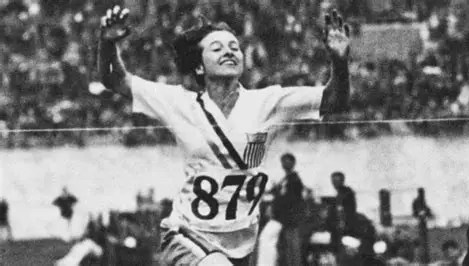
Days later, she added a silver medal in the relay. She was just sixteen.
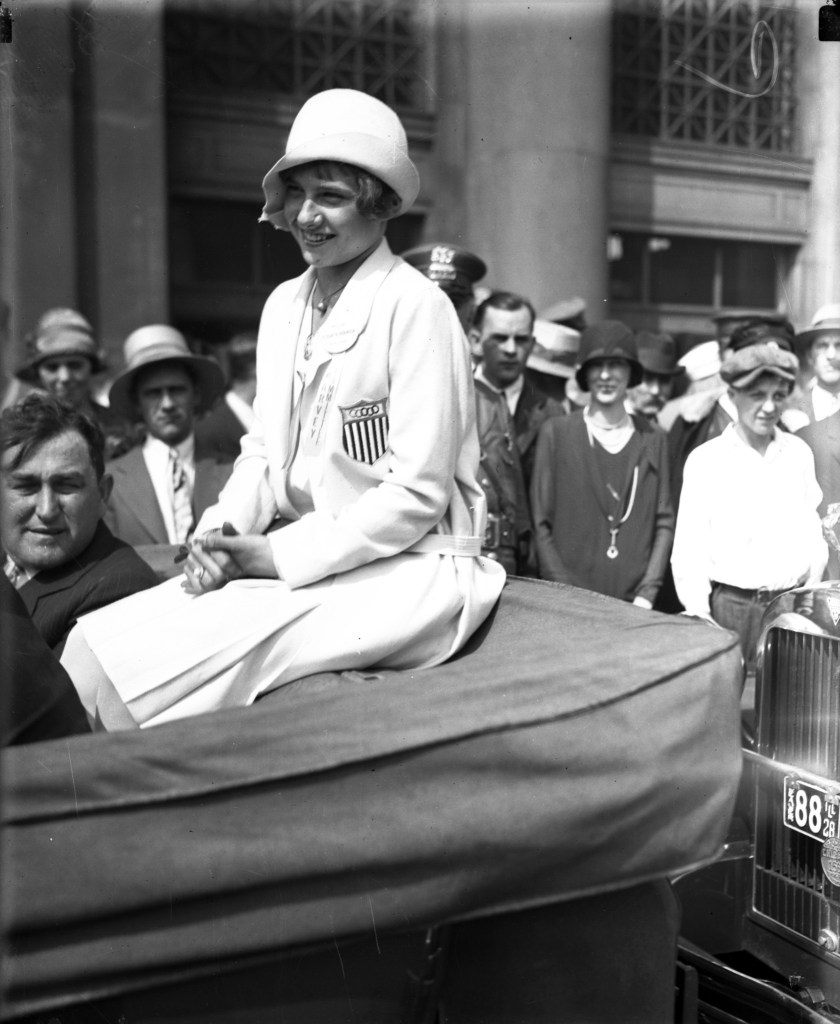
The Chicago Tribune writer wrote that the pretty, blue-eyed blonde was the darling of the Olympics as she raced down the cinder track with her golden locks flying in the wind, determined to win.
Betty Robinson was welcomed home with a ticker-tape parade.
TRAGEDY
Three years after her Olympic triumph, tragedy struck. Robinson was flying in a small biplane piloted by her cousin. The engine stalled and the plane nosedived into a field near Chicago. Mistaken for dead, the paramedics loaded her limp body into the trunk of a car and drove to the morgue.
The mortician discovered Betty was still alive, just in a coma. The injuries were devastating; her body was badly damaged. Her arm was severely broken, her hip cracked, and her leg so badly shattered that a metal rod was surgically inserted to hold it together.
She spent seven weeks in a coma, and when she woke up, the doctors told her she might never walk again. Running was history.
Her recovery was slow and painful. Betty spent months bedridden in the hospital. It was two years before she could walk a few steps.
Betty Robinson did not talk about what she had lost. She worked. One leg was an inch shorter than the other. She learned how to walk again. Then, how to jog. Incredibly, she returned to running and competing.
Her injuries had permanently changed her movement. She could no longer crouch at the starting blocks due to the fractures and surgeries on her left leg. But she never gave up on returning to the sport.
RECOVERY
Five years after being declared dead, Robinson qualified for the US Olympic relay team competing in Berlin. Hitler’s defiant salute did not slow down Mrs. Robinson as she helped her team seize the moment and win the gold.
She was an Olympic champion again.
Mrs. Robinson did not need praise. She put away the medals, hidden in a Russell Stover’s candy box. She raised a family.
Betty Robinson’s story was not about speed, but survival. She outran every limitation placed upon her. She demonstrated strength, courage, and humility. She refused to quit.
Do you ever feel like it is time to give up? Sometimes life feels too hard, but spiritual recovery is instantaneous. God always provides spiritual strength to go on. Do not quit. The challenge is part of your story.
No matter what trials and troubles you face, you are deeply loved by God and will never carry the weight of the world on your own. God’s compassion never runs dry when you feel empty. Every morning is filled with new mercies and greater grace.
Suffering and hardships are never the end of your story. You belong to God’s team. Always. Forever. The One who numbers the stars also guides your steps.
FINISH
In 1996, at 84, the young champion left for dead carried the Olympic torch through Atlanta.
That is the way to FINISH STRONG. Here’s to you, Mrs. Robinson!
We get older, our bodies weaken, bones break, knees and hips cry out to be replaced. Society underestimates us. Others discount us. The world dismisses us. We might even be dead to some people.
You and I still have a purpose in this earthly life. Love First and Love Most.
As age and circumstances change, that purpose does not vanish into thin air or hide in a storage closet. Setbacks do not determine our final destination. God uses setbacks as the setups to a brighter future we cannot see.
We do not write the story. We are the story of what God does with insignificant people, broken lives, crushed dreams, and dead hopes.
Betty Robinson almost missed a train which led to her discovery as a future world champion track star. She was later left for dead at the scene of a horrific plane crash where her story was declared to be over. She could not walk, so she developed perseverance and hope. She did not quit; she adapted. When she could no longer bend her leg to get into the starting block, she found a new way to run. She linked arms with others to stand on the championship podium together.
God can always breathe new life into your story.
Love never intended for us to be individual sprinters. We are members of a relay team. Our role is to get the baton to the next generation. We must finish our leg of the race. The obstacles are part of the story. Finish strong!
Love finds new ways to run! Keep pressing on to the goal. Speed can be overrated as we get older. But we can still carry the torch high!

